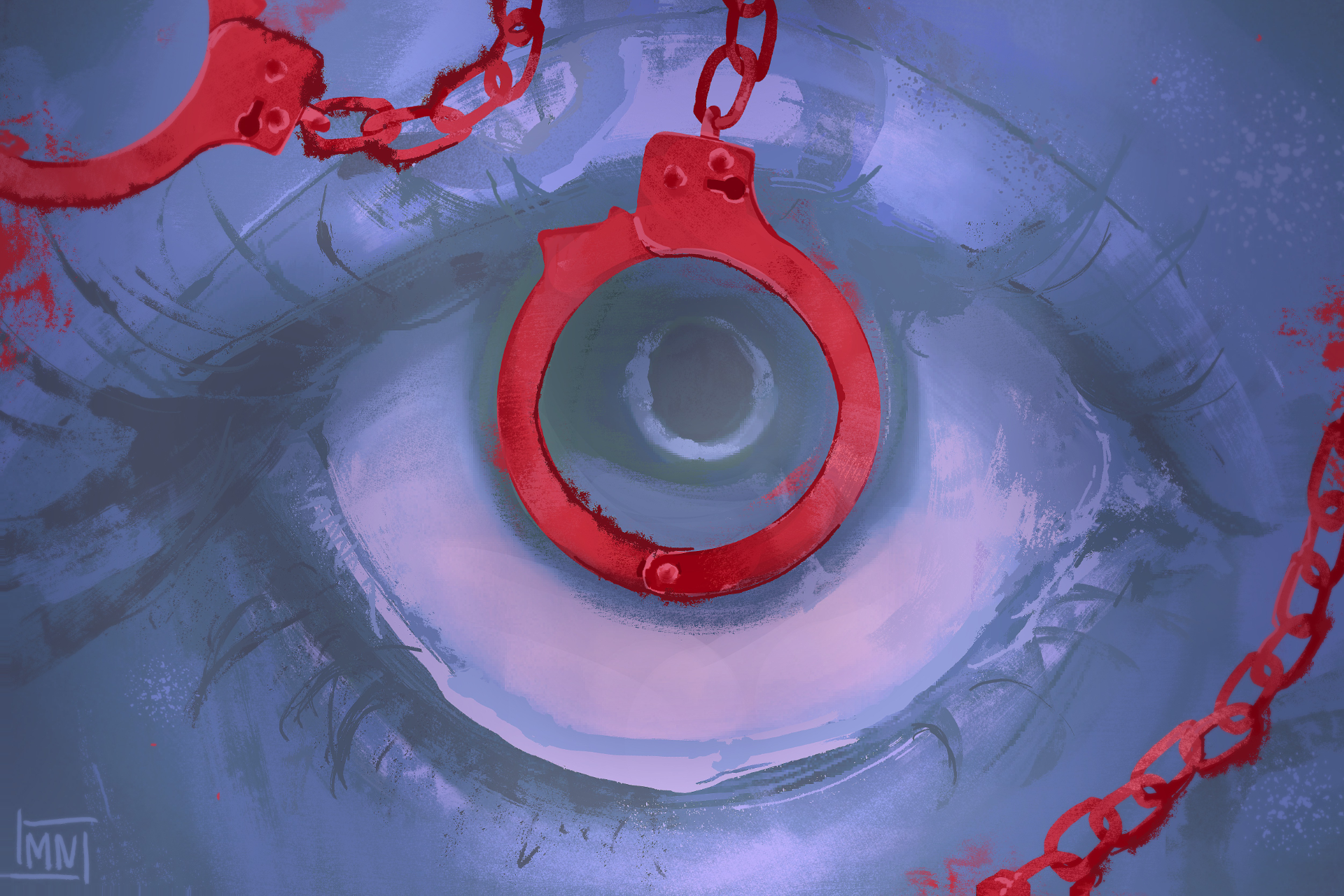

Written by Isabel Grace. Header illustration courtesy of Mason Quince (@mudqin).
“Hedda Gabler” is a famous play by Norwegian playwright Henrik Ibsen, and there have been a number of adaptations and productions of this play since it first appeared on stage, January 31, 1891. The most recent of these being the new film, “Hedda,” directed by Nia DaCosta (“The Marvels,” “Candyman,” “Little Woods”), and starring Tessa Thompson (“Thor: Ragnarok,” The “Creed” Trilogy, “Passing,” “Westworld”) as Hedda Gabler. The film premiered this past week at the SCAD Savannah Film Festival, and the line wrapped around both the Lucas and Trustees Theaters with students and patrons eager to witness the brilliance of Dacosta and Thompson. I knew very little going into this movie, and nothing about the plot of the original play. I went in with a completely clean slate.
The film pays homage to the original play while also adding modern elements to connect with younger generations who do not know the play as well as others—and nothing seemed terribly out of place. The story felt whole and raw. Dr. Ejlert Lovberg was changed to Dr. Eileen Lovberg, which created a shift in the dynamic between characters. Just as Hedda is still stuck in a patriarchal system, so is Eileen Lovberg. Their love story adds more drama because of the secrecy they must keep.
The cinematography and production design of this film were absolutely stunning. The color tone of the film feeds into the tension and the drama. The darker tones of the character’s clothing and decor of the house embody Hedda’s dark, twisted, crazy personality. There were several shots on mirror and glass, where the audience sees only the reflection of what is going on. I love these kinds of shots, and I love how liberally they were utilized. This stylized choice added to the psychological elements of the film.
Tessa Thompson is such a force of nature in this film. It never ceases to amaze me that she is an American who can pull off a flawless British accent. The way she portrayed Hedda felt connected and completely her own, and it was unlike any other role I had ever seen her in. The range she has is incredible. Nina Hoss (“Tar,” “Tom Clancy’s Jack Ryan”), who plays Eileen Lovberg, was spectacular. She portrays a damaged, flawed woman, and does so beautifully. Both of these women play polar opposite leading ladies, causing the audience to internally fight back and forth about who to root for. Other notable members of the ensemble cast include Imogen Poots (Thea Clifton), Tom Bateman (George Tesman), Nicholas Pinnock (Judge Roland Brack), and Kathryn Hunter (Bertie).
The ending is dark, ambiguous, and tense. It’s unclear what happens, which I believe is on purpose. I think it was altered to add another level of torture Hedda experiences within her mind. The movie starts with her in the water and ends just the same—which I loved—it felt full circle. “Hedda” is now streaming on Amazon Prime, and I implore those who did not have a chance to see this film yet to watch it.