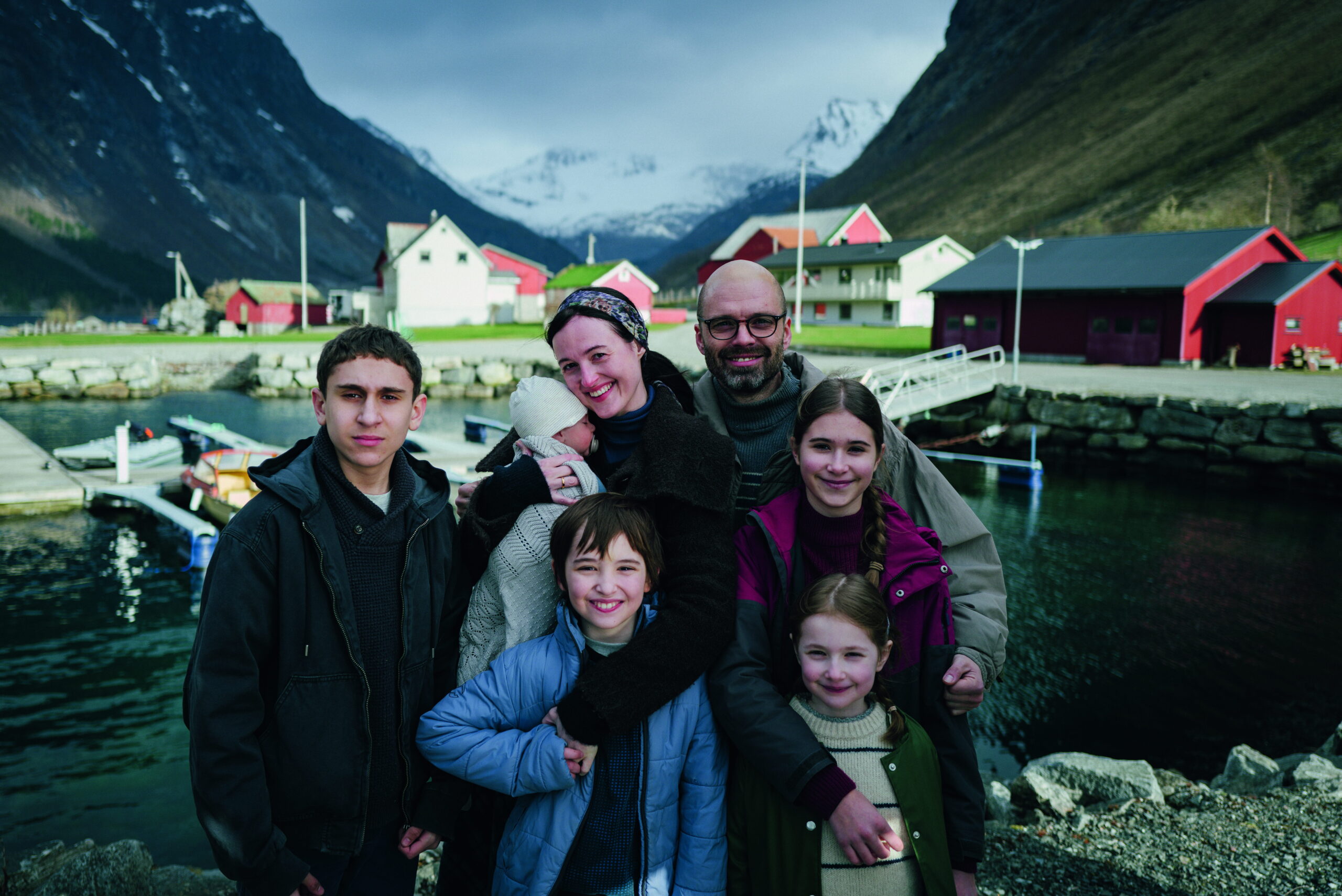
The 2026 edition of the SCAD Savannah Film Festival officially begins on October 24th. The week-long event will feature many special guests and presentations. One of the films in the lineup stands out from the rest. Fjord is the most recent Palme d’Or-winning project from seasoned Romanian filmmaker Cristian Mungiu. I was fortunate to get an early screening of the film, as well as the chance to sit down with the director and take part in a journalist roundtable.
Held via Zoom call, student journalists from across the country waited for the director to finish up a separate interview. Once he had, he joined, and we began to work our way down the list of pre-selected questions. Here are a few of them, and his responses.
Q: “Throughout the movie, you hear a lot of “undesirable” noises such as a dog barking or helicopter blades whirring during dialogue. What was the decision to keep them/mix them into the scene? Was it an atmospheric decision or something else?”
- Gavin Englert, SCAD – SCAD Radio
A: “That is a very good example of things that just happen. You need to be aware when making a film that the things you have [planned] may not always be the best solution. It is good to stay open to what could happen next. Our very first day of shooting, for example, in which there was a thirty-degree storm outside. All of the things not tied [down] with a rope were blown away by the wind. So all of a sudden we couldn’t do what we were there to do on the first day. We were meant to start with the smaller scenes, so that the actors get to get used to this style of mine. Master shots for everything which is difficult for them. But all of a sudden, we needed to change the plan. Then, we got inside and we realized with the actors on set, the only thing we could do was the most difficult scene in the film. […]
As I was staging that situation, I learned that I should be using this lovely storm that was outside. [The storm] corresponded a lot to what I felt was inside [Lisbet] as a character, as an actress. Just full of these…contradicting feelings. And I thought I would [have been] so stupid not to see this weather. But how can you see the wind? So I was talking to my prop master, who was used to working with me, and I told him, ‘do we need to see the wind?’
He tells me, ‘what we do is we hang some cloth on some rope. And [then] you’ll see the wind.’ We couldn’t do it because we were on the first floor. So I said ‘okay, bring me some sort of a flag.’ He tells me that ‘we don’t have any remaining flags’ and that ‘nobody told me to bring one.’ […] This is how we ended up with this flag he found in half an hour in one of the neighboring houses. A huge flag. We placed it there, just to feel a little bit of wind. And then we ended up having this flag that has its own personality in the film. I don’t know if you know much of how production film works. Nobody can make that flag with a wind machine have this kind of active life. This just happened. You have to make choices as a filmmaker. […]”
Q: “Given your background in teaching and lecturing, how do you think your experience as an educator has shaped your perspective as a writer and director? Do you think this impacted your portrayal of the child welfare system in this film?”
- Kate Given, Columbia – Double Exposure
A: “My most important aspect in dealing with education is that I am a father as well. I’m always, you know, double checking the ideas that I am having with my children. They are quite grown up now. Everything I did in film was always connected with a moment of my life. Especially with the ideas I was having as a parent. I made a film called Graduation, about the most complicated dilemma that parents have. If you are educating your children for the world of today that is, lets say not so ethical. So you educate them in a way in which you want them to be survivors. Survivors so that they fight with any kind of means and always prevail. Or, if you take the risk of educating them more for the ideal world you wish they may be able to change. But the risk is that they may not have the tools to fight the world in which they live today.
At the same time, you might teach them by doing this, that principles are more important than anything else. Even [over] their own survival. You can’t expect that the world will be better, unless you take the risk to pass these values to your children. It’s mostly from educating my children that I learned it doesn’t really matter what you tell your children. Most of their education is going to be made from their practical experience and seeing the adults act. Their parents as well, but also people around them. They will learn what works in the world and what doesn’t. […]”
Q: “You served in several key roles in this production. What’s your leadership style when it comes to creating a cohesive vision with your cast and crew?”
- Ava Malamut, Boston University – The Daily Free Press
A: “I try to use this multiple positions that [I have] — I’m a writer, director, producer. And I need to make sure I am coherent with the aims that the films have. For me, what’s important about this film is that I’m using the freedom I have as a filmmaker not only to do an entertaining film; but to bring something forward that would make people think. And to show that it’s possible to make a film which can be enjoyable, and you have a lot of betrayals and tension. But at the same time, it allows people to use their critical spirit to analyze some facts happening in front of them. […] Normally, you expect that the filmmaker would take you by the hand and run you through the film. There are good things and bad things, all the questions are being answered by the end of the film. Of course, this is a perspective on films, but we shouldn’t just be doing entertainment with cinema. The film can be entertaining and still tell you something.
So for example, what I am doing on the set. I can change things, because I can correct things every other second. Understanding things don’t work as I planned them to work. For example, I was hoping initially that this film was going to be a lovely painting on white. But there was no snow whatsoever. So I had to change the shooting schedule everyday to wait for the snow. At the same time, there is something about the casting process. I got into this casting process not knowing which part Renate Reinsve was better for. I talked to her through our Norwegian partners. I told her, ‘Look, I need to talk to you. I want to work with you.’ and she said she wanted to work with me as well. But, I am going to be very fair. The casting process is not about you. It’s about me understanding what you are better for. She agreed, we read for both parts. Finally, she decided to do the part which was not so close to her as her beliefs in real life. […] I enjoy this freedom of making all of these creative choices. There is a period in the development of the film in which the cast and also the crew has the time to make their own suggestions. It’s just that given this particular way in which I make the film with just one shot per situation, these decisions need to be made before. On set, we don’t have a lot of time. Of course we change things on the set as well, but we need to come on with the plan in which we agreed.
Q: “In Fjord, you seem to leave moral judgment in the viewer’s hands. How do you resist imposing your own judgment while still shaping our perspective as a director? Do you aim for viewers to arrive at a position, or to simply take on the act of questioning the personal values and social norms through which they judge others?”
- Florence Barillas, Yale – The Yale Herald
A: “I am not this naive to believe that with film or with narratives in general that you can change people’s opinions. I don’t believe in this kind of cinema where you see characters that are completely evolving. They change what they were thinking about the world. I don’t believe in this. I think in this model of fiction, of narration, that tries to start in reality. I’m not saying what I do in films is reality, but it’s a kind of fiction following the pattern of reality. And, you know, facts in life do not come [pre]interrpreted. There isn’t anything that’s good and bad. […] You need to make something out of the facts that are in front of you. So I believe there is a way of filmmaking in which this can also travel through cinema. Yes, you need not to be preachy with your films. Not to be didactic, you are still telling people a story they need to like. But at the end, you are encouraging them to use their critical spirit. And to make something out of the story based on the facts not on one person or what people say in the film. Sometimes, you know, people imagine that what the characters say in the film are representing my position or are representing the ‘truth.’ Of course not. People lie in the films, they are being as manipulative as anyone in reality. What matters is that the spectators try to analyze their beliefs and look for a way of communicating with this other bubble that doesn’t have the same views of them. This is what we need in society. We got to live in such a radicalized society, in which we are just talking to people in our bubbles. We try not to see that there are so many people having different views. We won’t be convinced by their views, but we need to be aware of this, and we need to start initiating some sort of a dialogue. Because if not, society will turn and be very very violent.”
Fjord is playing at noon on October 25th at the Trustees Theater; you can buy tickets here: https://filmfest.scad.edu/schedule/fjord. I am extremely grateful to have participated in this event. Special thanks to Mr. Mungiu for sitting down with me. Thank you to our SCAD Neon Representative, Teaghan Verow McLaughlin. As well as Neon Events & Festivals manager Lucie Boulet for the opportunity.